HW H00XA
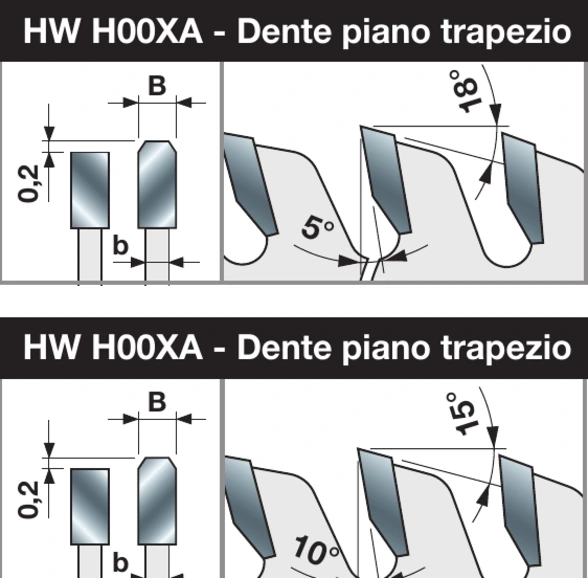
Dente piano trapezio
H00XA carbide, Triple chip grind (TCG) tooth geometry.
Professional circular saw bladesFreud
Freud LU3D professional circular saw blade family with 14 verified configurations from 200 to 350 mm.
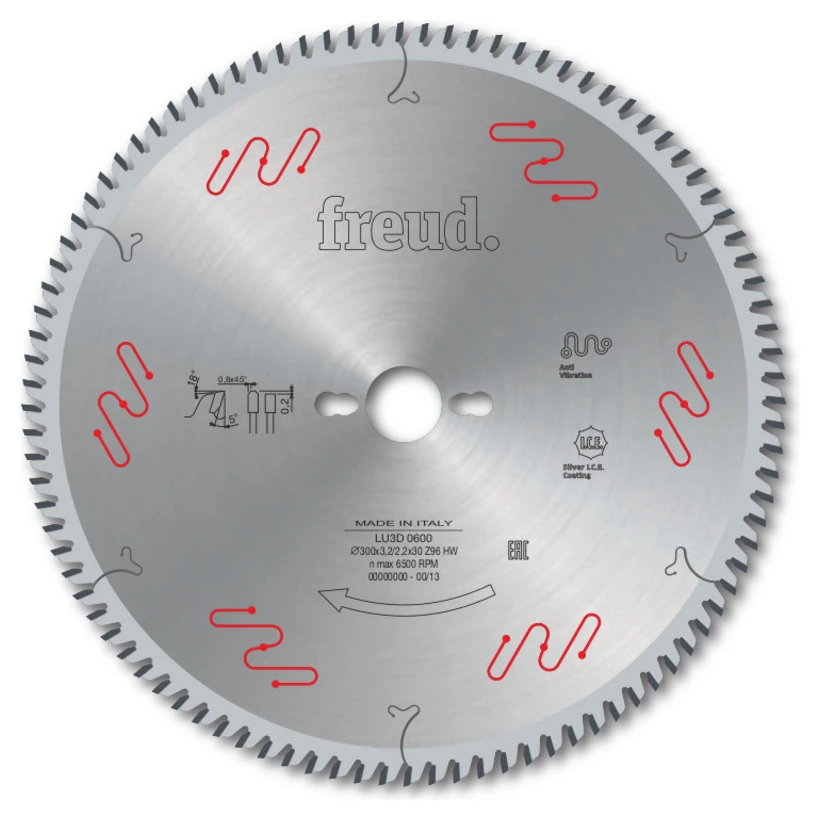
Application
The LU3D range includes 14 configurations, with diameters from 200 to 350 mm, bore sizes from 30 to 60 mm and tooth counts from 60 to 108. Use the dimensional selector to identify compatible codes, then compare kerf, plate thickness and pin-hole pattern.
Technical note
H00XA carbide, Triple chip grind (TCG) tooth geometry, 5° o 10° secondo il codice hook angle. Check blade diameter, bore, flange or pin-hole pattern and maximum RPM against the machine specifications before fitting.
Compatibility at a glance
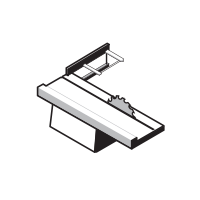
01 Compatible machines
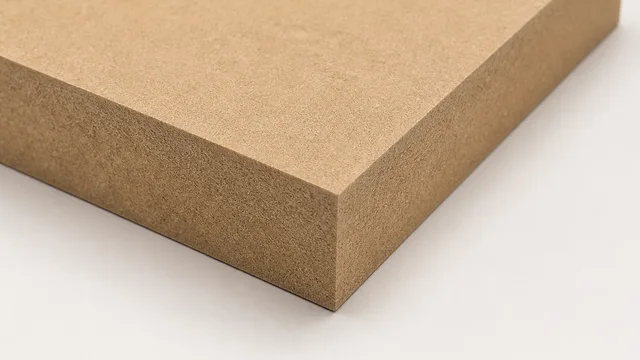
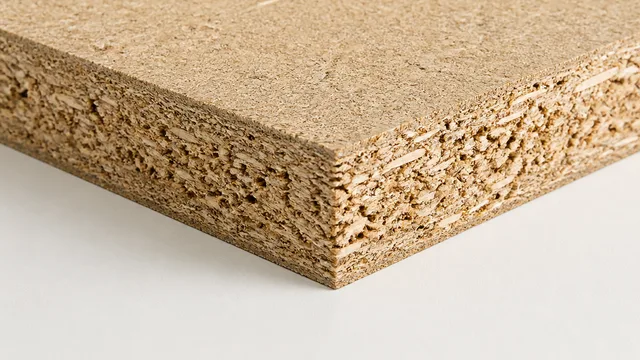
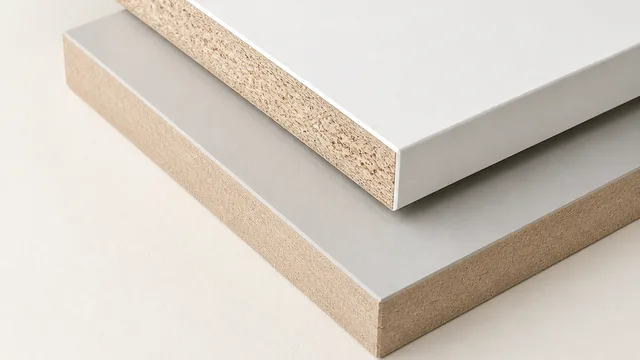
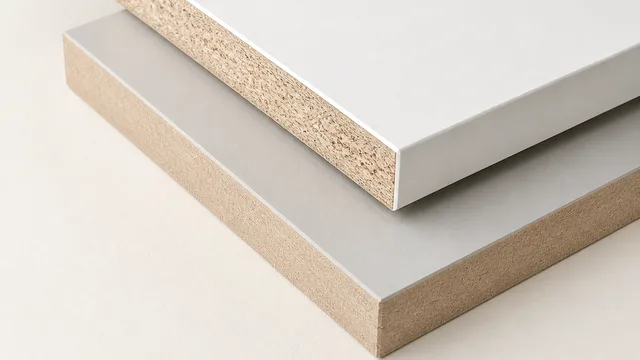
02 Suitable materials
Always check the pin-hole pattern
Technical configuration
Shared family specifications, kept separate from the dimensions of each individual code.
H00XA carbide, Triple chip grind (TCG) tooth geometry.
Specially formulated carbide tips for durability and cutting quality.
Coating designed to reduce friction, heat and material build-up.
Technology designed to reduce vibration and noise.
Operating parameters
The chart shows how the recommended speed changes across the LU3D range.
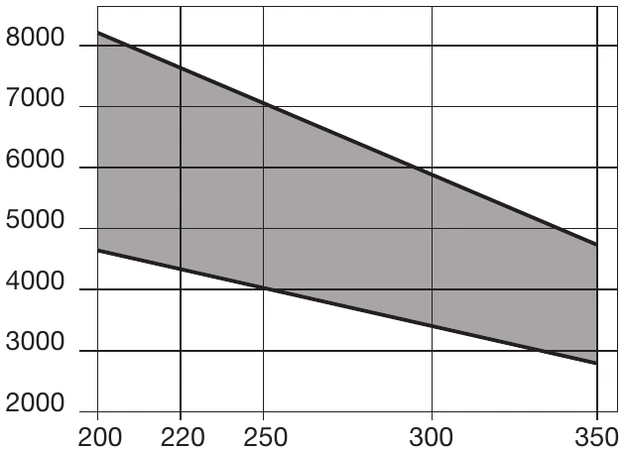
Rotational speed
The actual speed must remain within the limits of both the blade and the machine.
Essential check: before fitting the blade, check its diameter, bore, pin-hole pattern, direction of rotation and the maximum RPM marked on the blade.
Dimensional selector
Filter the variants by the two key dimensions, then compare kerf, plate thickness, tooth count and pin-hole patterns.
| Code | Ø mm | Kerf B | Plate b | Bore d | Teeth Z | NL / KN | α | Article no. |
|---|---|---|---|---|---|---|---|---|
| LU3D0100 | 200 | 3.2 | 2.2 | 30 | 64 | 2/7/42 | 5° | F03FS05081 |
| LU3D0200 | 220 | 3.2 | 2.2 | 30 | 64 | — | 5° | F03FS05083 |
| LU3D0400 | 250 | 3.2 | 2.2 | 30 | 80 | FT01 | 5° | F03FS05088 |
| LU3D0455 | 250 | 3.2 | 2.2 | 55 | 80 | — | 5° | F03FS09973 |
| LU3D0600 | 300 | 3.2 | 2.2 | 30 | 96 | FT01 | 5° | F03FS05093 |
| LU3D0700 | 300 | 3.2 | 2.2 | 35 | 96 | — | 5° | F03FS05096 |
| LU3D0900 | 350 | 3.5 | 2.5 | 30 | 108 | FT02 | 5° | F03FS05098 |
| LU3D1100 | 250 | 3.2 | 2.2 | 30 | 60 | FT01 | 10° | F03FS05100 |
| LU3D1160 | 250 | 3.2 | 2.2 | 60 | 60 | 2/11/85 | 10° | F03FS09974 |
| LU3D1300 | 300 | 3.2 | 2.2 | 30 | 84 | FT01 | 10° | F03FS05101 |
| LU3D1500 | 300 | 3.2 | 2.2 | 30 | 96 | FT01 | 10° | F03FS05104 |
| LU3D1700 | 350 | 3.5 | 2.5 | 30 | 108 | FT02 | 10° | F03FS05105 |
| LU3D2000 | 350 | 3.5 | 2.5 | 30 | 72 | FT02 | 10° | F03FS05108 |
| LU3D2100 | 300 | 3.2 | 2.2 | 30 | 72 | FT01 | 10° | F03FS05810 |
Before choosing
Once LU3D has been identified, the exact product code depends on the machine requirements. The portal keeps these two decisions separate.
Permitted diameter, bore and pin holes.
Panel sizing.
Kerf, plate thickness and tooth count.
Speed and cutting height according to the family charts.
Frequently asked questions
Quick answers for checking the application, compatibility and operating parameters before selecting a product code.
LU3D is designed for Panel sizing. Its suitability must be checked against the material, machine and exact variant specifications.
The family is specified for MDF, Chipboard, Laminated MDF, Laminated chipboard. Material density, coating, thickness and condition can affect the resulting edge quality. For LU3D, verify the selected reference within its 200–350 mm diameter and 60–108-tooth range.
The catalogue specifies Squaring saws. Before fitting, check diameter, bore, flange or pin-hole pattern and the permitted maximum speed. For LU3D, verify the selected reference within its 200–350 mm diameter and 60–108-tooth range.
The family uses Dente piano trapezio tooth geometry. Refer to the technical note for the carbide grade and hook angle. For LU3D, verify the selected reference within its 200–350 mm diameter and 60–108-tooth range.
There are 14 variants, with diameters from 200 to 350 mm, bores from 30 to 60 mm and tooth counts from 60 to 108. For LU3D, verify the selected reference within its 200–350 mm diameter and 60–108-tooth range.
For LU3D, start with the machine bore (30–60 mm) and the required diameter (200–350 mm). Then select within the available 60–108-tooth range by comparing kerf, plate thickness and any pin holes or keyways.
The correct speed for an LU3D blade depends on the selected diameter, which ranges from 200 to 350 mm, and on the machine. Never exceed the lower of the maximum RPM marked on that blade and the machine manufacturer’s limit.
A specialist can assess and resharpen the Dente piano trapezio carbide teeth used by LU3D, provided the blade body is undamaged. The original geometry, angles and balance must be preserved; the number of possible services depends on the condition of the selected reference.
Guides
The catalogue starts with the tool; the guides start with the cutting problem. If you are still choosing, read these first.
The most widespread and underestimated panel. Beneath the tooth it is heterogeneous and must be treated accordingly.
Open guide 4 min readEight machine checks to make before ordering, plus the question that changes the choice: is there a scoring blade?
Open guide 6 min readOne of the most predictable panels in the cut and one of the most demanding on the cutting edge. Its manufacture explains why.
Open guide 6 min readThe substrate is rarely the main issue. A surface only fractions of a millimetre thick determines whether the finished component is acceptable.
Open guide 5 min readFour profiles and four different ways of entering the material: how to recognise them and when each becomes the necessary choice.
Open guide 5 min readThree panels that appear to need the same blade but stress the cutting edge in three different ways.
Open guide