Technical guides
Blade selection
The dimensions shown in every technical table and how they work together. Read these guides first, as all other sections assume that these terms are understood.
5 guides available
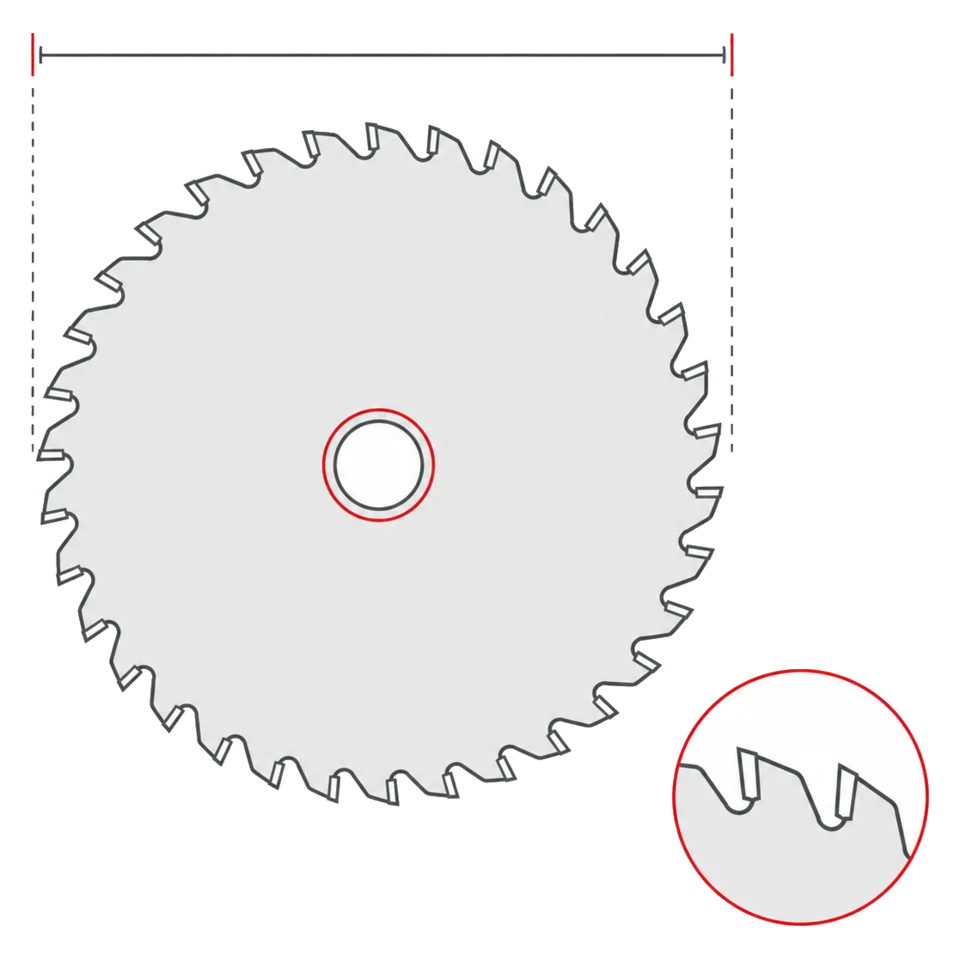
- 01 How to choose a professional circular saw blade Always start with the machine, not the material: diameter and bore are fixed constraints and eliminate most product codes by themselves. Then select the family according to the material and cutting direction, and only then choose the tooth count, which determines the balance between finish quality and feed speed.
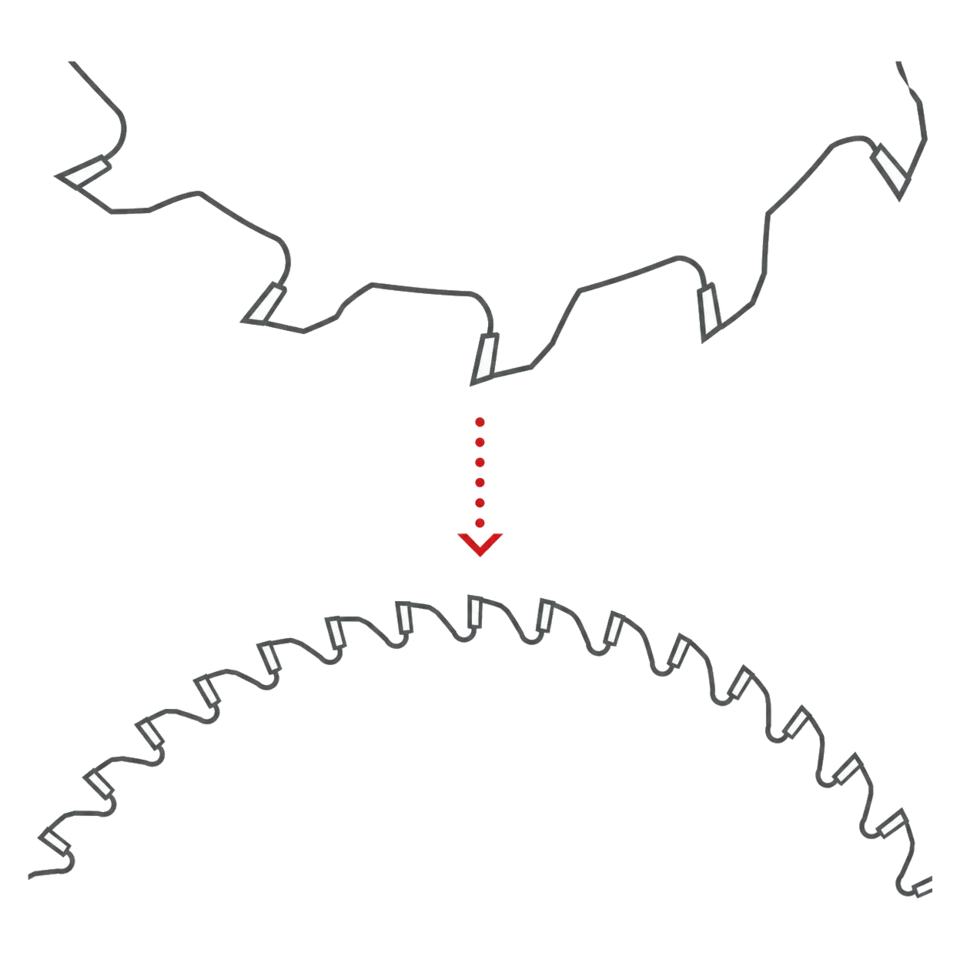
- 02 How to choose the tooth count for a circular saw blade Tooth count is selected in relation to material thickness. A useful starting point is to keep about three or four teeth engaged simultaneously: too few can make the cut aggressive and unstable, while too many reduce chip space and increase heat. The manufacturer's formula provides an indicative Z value, which must then be matched to an available blade configuration.
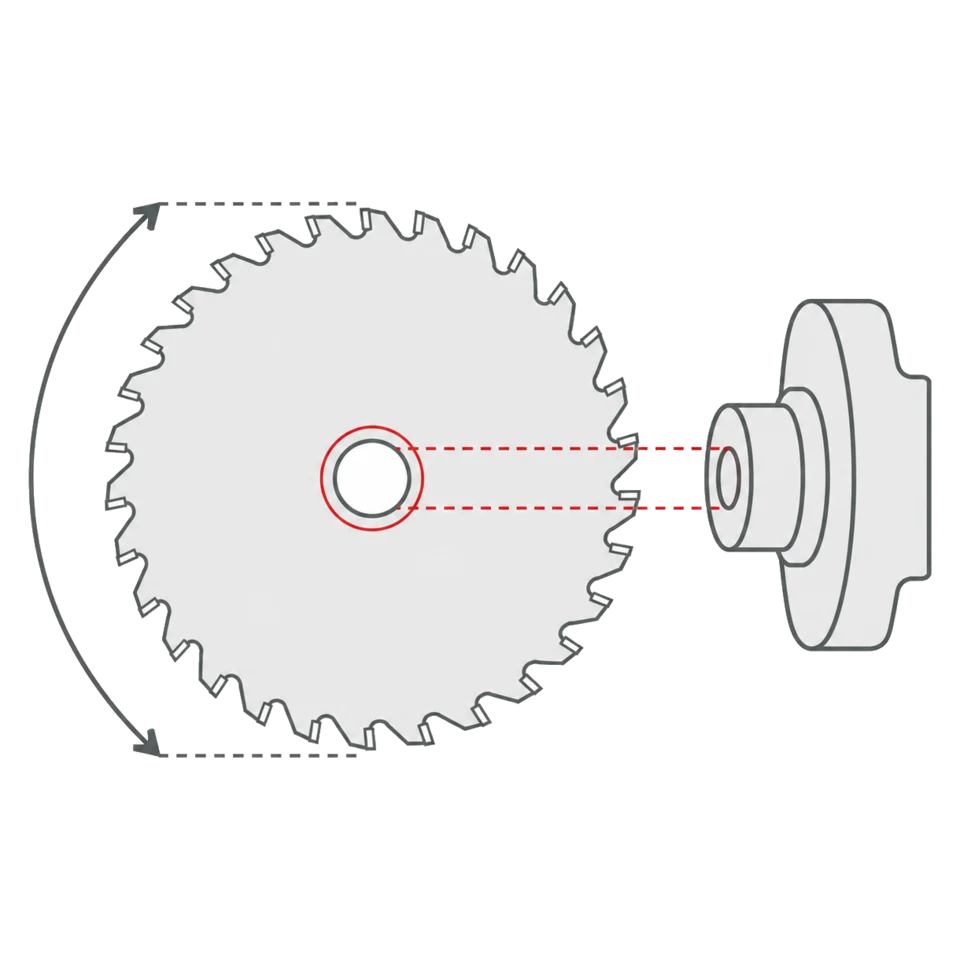
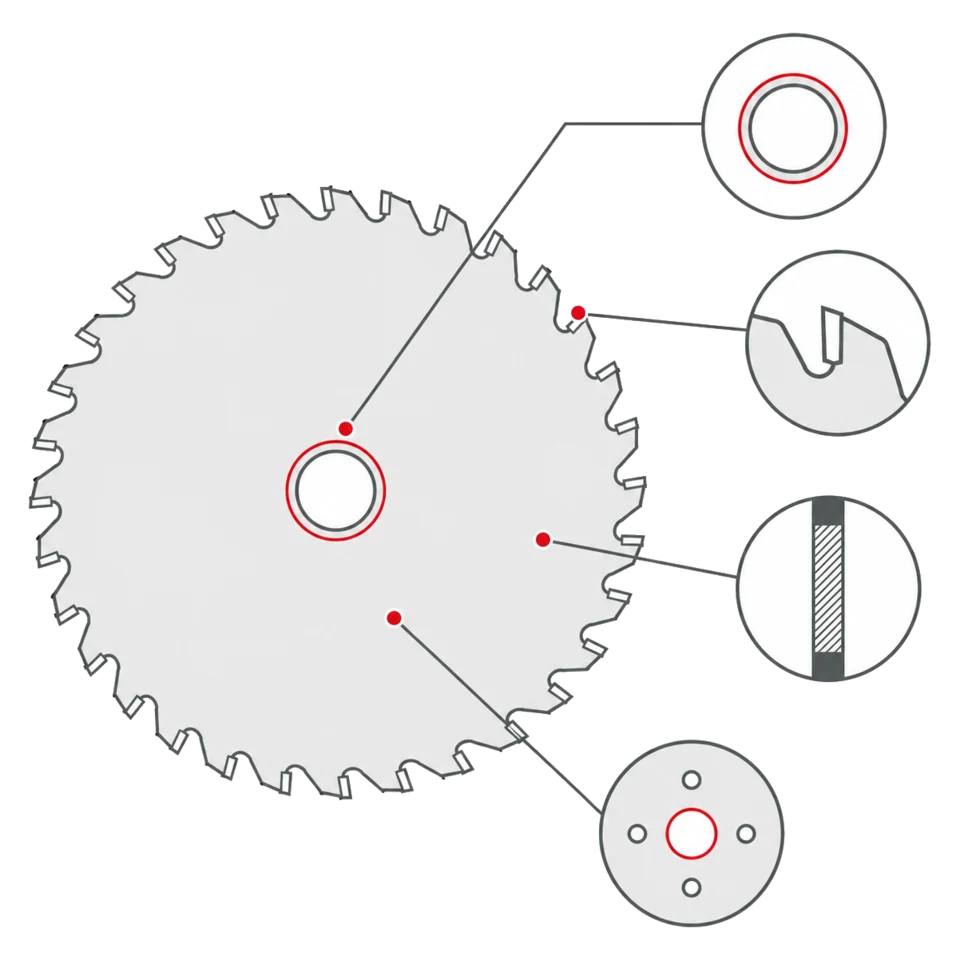
- 03 Circular saw blade diameter and bore: checking compatibility Compatibility depends on three specifications. Diameter must remain within the cutting unit's permitted maximum, the bore must match the spindle exactly, and any additional pin-hole pattern must match the flange. If one of these checks fails, the blade either cannot be fitted or cannot operate correctly and safely.
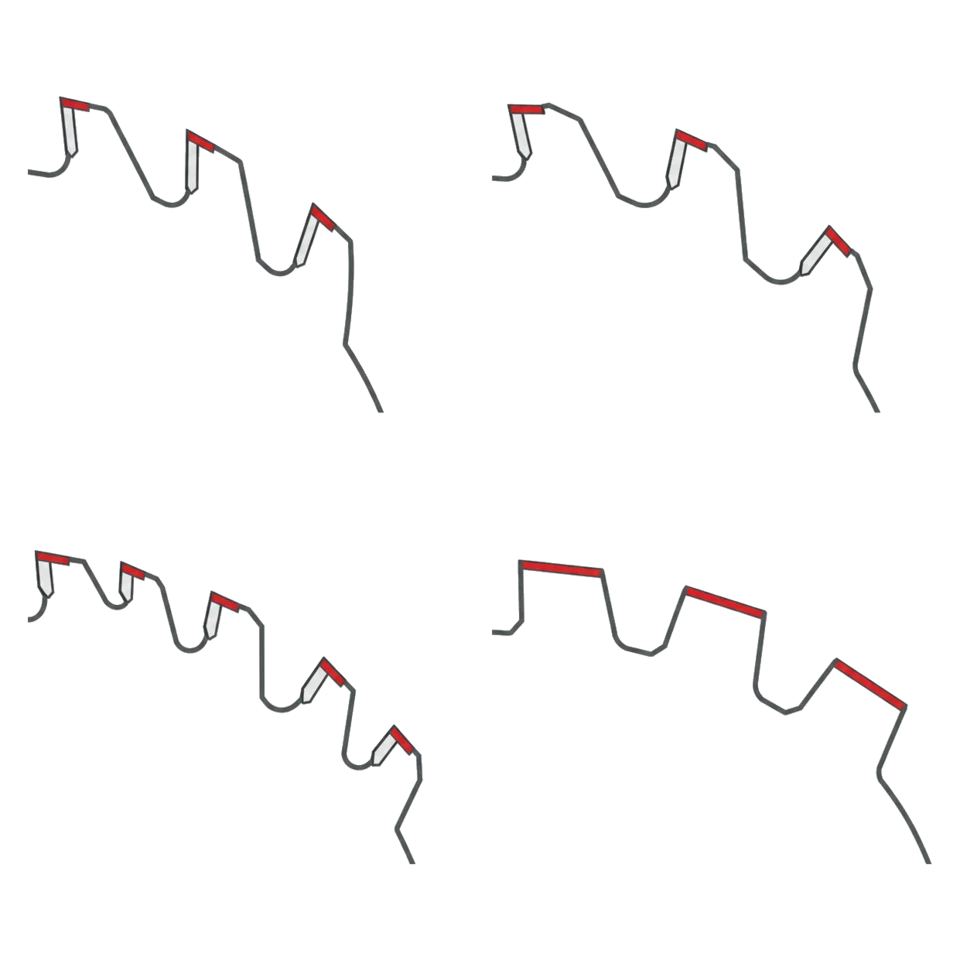
- 04 Saw blade tooth geometries: ATB, TCG, DTCG and flat top ATB uses an inclined cutting edge to sever fibres and is the reference geometry for wood and panels. TCG alternates a trapezoidal tooth with a flat tooth and suits hard or abrasive materials. A flat-top tooth removes material efficiently when finish is secondary. DTCG extends the trapezoidal principle for demanding materials such as steel.
- 05 Circular saw blade technical glossary Circular saw blade tables use a recurring set of symbols: D for diameter, B for kerf, b for plate thickness, d for bore and Z for tooth count. These are accompanied by tooth-geometry abbreviations and mounting-hole patterns.
Other topics